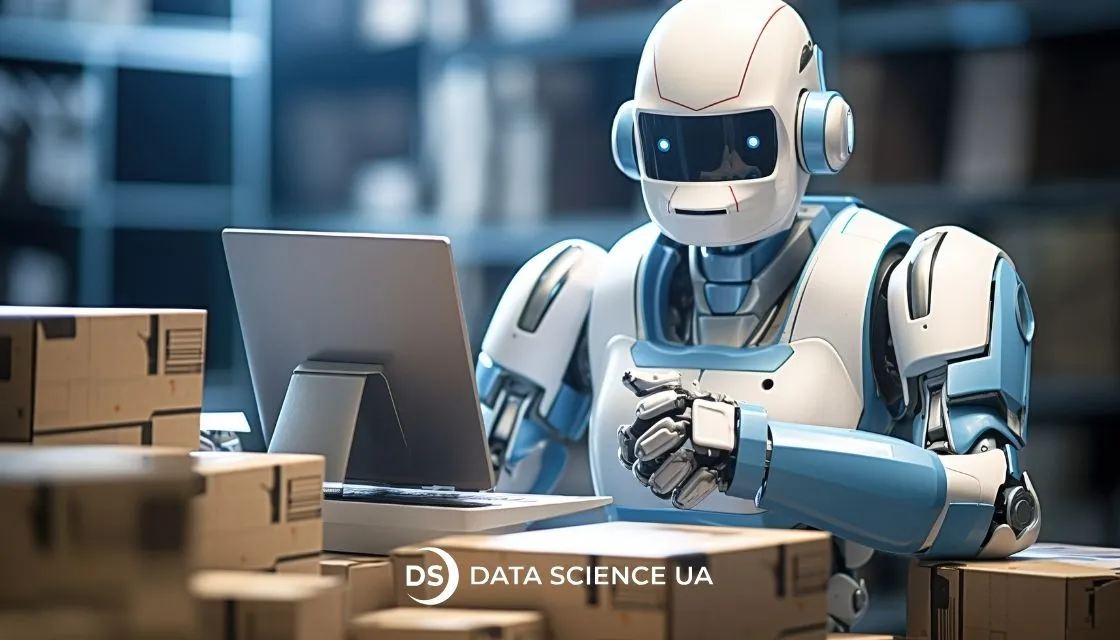
AI agents for e-commerce: why does your business need a digital assistant
Online shopping used to be like a quest: endless catalogs, guessing sizes, weeks of back-and-forth with support.
Today, customers have less patience and higher expectations. Luckily, with the advent of AI agents for ecommerce, everything has become easier!
AI agents are smart systems that work 24/7 and know more about your customers than they do themselves. They don’t just answer questions; they understand needs, offer solutions, and learn from each interaction.
Unlike simple chatbots with their pre-written phrases, modern agents can analyze context and engage in natural dialogue. Implementing AI agent development services helps turn a regular online store into a personal shopping assistant for each customer.
What is the difference between AI agents and regular tools
The difference is roughly the same as between a navigator and a paper map; both will show you the way, but one will do it much more intelligently.
Traditional bots:
1. They work with pre-written scripts: see a keyword, give an answer
2. Require constant programming of new situations
3. Struggle with non-standard questions
4. They give the same answers to all customers
5. Good for simple tasks, but they get stuck on complex ones
New generation AI agents:
1. They analyze context and intent, not just keywords
2. They can adapt and improve through training on new interactions or data
3. Find solutions even in unfamiliar situations
4. Personalize communication for each client
5. Easily handle multi-step tasks
Imagine a customer writes, “I want to return my sneakers”. The chatbot will provide a link to the instructions. The best AI agents for ecommerce will look at the order history, understand the reason, and offer an exchange for a model or size that will actually fit.
Why AI agents are becoming the foundation of modern commerce
It’s not about technological trends, but about the changed expectations of customers and the possibilities of business.
Modern customers are accustomed to instant responses and a personal approach. They want the store to remember their preferences and offer suitable products. It is practically impossible to manually provide such a level of service for thousands of clients.
The volume of customer information is growing every day. Big data in e-commerce contains a lot of useful insights, but it’s unrealistic to process them without smart tools. AI agents are able to find patterns in this information flow.
Practical benefits for business:
Resource savings are obvious: one agent can replace several support staff members, working without days off and breaks. At the same time, the quality of service doesn’t drop, and often even increases.
Real-time personalization is becoming available. An agent can simultaneously conduct hundreds of dialogues, each time selecting an individual approach and offering relevant products.
Automatic sales optimization happens naturally. Agents analyze customer behavior and adjust the product promotion strategy on the fly.
Preparation for the development of technologies:
Internet of Things, voice shopping through smart speakers, virtual try-on: all of this is no longer science fiction. AI agents easily adapt to new interaction channels, providing a unified shopping experience.
The main advantage is the ability to self-improve. The more an agent communicates with clients, the better they understand their needs and the more accurate their recommendations become.
Practical view on implementation:
The shift to using AI agents is a natural evolution of online commerce. Just as everyone once switched from catalogs to full-fledged websites, the time for smart assistants has come.
For online store owners, this is an opportunity to gain a competitive advantage and free up time for business development by delegating routine tasks to reliable digital employees. The main thing is to start using these tools properly and gradually expand their functionality.

4 types of AI agents for online commerce
- Goal-oriented agents
- Learning agents
- Planning and decision-making agents
- Utility-based agents
In the world of AI agents, there is a division of labor. Each type specializes in specific tasks, like departments in a well-organized company. Understanding this classification is useful; it will help you understand which assistant is right for your business.
Goal-oriented agents
This is the same employee who just received a clear task and immediately performed it methodically. That’s how goal-oriented agents work; they have a specific goal, and all their actions are aimed at achieving it.
In an online store, such an agent can be responsible for increasing the average check. It analyzes the contents of the cart and suggests additional products, but it does so thoughtfully. When you buy a smartphone, the agent will offer a case and protective glass. When you order children’s clothing, it will show suitable accessories.
The main feature of these agents is their focus on a goal. They remain focused on their mission, avoiding distractions and always staying on track. At the same time, they are flexible enough to adapt methods to a specific situation.
Practical application:
Increasing conversion through personalized offers
Reducing the number of abandoned shopping carts
Automatic redirection of customers to purchase
Sales funnel optimization
Learning agents
These are the “perpetual students” of the digital world. Every interaction with a client becomes a lesson for them, making them smarter and more efficient.
Initially, the student agent can give standard recommendations. But after a month, it already knows that customers from northern regions are more likely to buy warm clothes in October than in November, or that buyers of electronics often ask about additional warranties.
What they study:
Behavioral patterns of different customer groups
Effectiveness of various offers and discounts
Seasonal fluctuations in demand
Preferences for delivery and payment methods
Reaction to different communication styles
Planning and decision-making agents
These agents are the strategists of your business. They don’t just react to what’s happening; they plan their actions, simulating various future scenarios.
The planning agent that manages inventory takes into account many factors: seasonality, holidays, advertising campaigns, and social media trends. It knows ahead of time that demand for gifts will increase in the run-up to Valentine’s Day, and prepares the relevant offers.
In working with clients, such agents build long-term relationships. They remember the buyer’s interests and plan a chain of interactions: first, information about new products, then a personal discount, and then a reminder about the products on the wish list.
Applications:
Planning advertising campaigns
Inventory and Assortment Management
Building client journeys
Forecasting trends and demand
Automating email marketing chains
Utility-based agents
These are the pragmatists who always seek a middle ground: a solution that benefits both the client and the business. They analyze all available options and choose the best one.
An utility-bases agent in customer support doesn’t just solve the customer’s problem, but does so in the most reasonable way. If the item can be replaced, repaired, or the money returned, the agent will choose the option that suits the buyer and is economically feasible for the company.
These agents are especially valuable in dynamic pricing. They instantly analyze demand, competitors’ actions, inventory, and offer a price that maximizes profit while remaining attractive to the buyer.
Key features:
Dynamic Pricing
Optimizing Logistics Solutions
Balancing the interests of the client and the company
Choosing the most effective communication channels
Distribution of advertising budget among channels
Key advantages of AI agents for online businesses
Economic efficiency
The first thing businesspeople notice after implementing AI agents is a change in personnel expenses. One AI agent can handle the workload of several support staff members simultaneously, operating 24/7 without breaks or sick leave.
But it’s not just about saving on salaries. AI agents make almost no mistakes in routine operations; they don’t get tired or distracted, and always follow established procedures. This reduces the number of returns due to incorrectly processed orders and misunderstandings with customers.
Scalability without stress
Traditional support team scaling is about finding employees, training, adaptation, and quality control. With AI agents, it’s easier: an increase in the flow of clients, and the agents will handle it without any additional efforts on your part.
This is especially noticeable during peak periods: sales, holidays, and advertising campaigns. Instead of rushed work and overburdened support, customers receive the same high level of service.
Real-time personalization
AI-agents remember each customer and their preferences. They know what a person bought before, what they looked at but didn’t buy, what their clothing sizes are, and their favorite brands. This information is used for personalized recommendations and suggestions.
The result is an increase in the average check and customer loyalty. People are more likely to shop at stores where they are understood and offered truly suitable products.
Integration with business processes
Modern AI agents can easily integrate with existing systems: CRM, warehouse programs, and analytics systems. Professional AI software development services ensure seamless integration with your IT infrastructure.
This means that agents have access to all the necessary information in real-time and can make informed decisions based on current data.
Best AI agents for online commerce in 2026
The market for AI agents for ecommerce is actively developing. Let’s consider the most interesting solutions that have already proven their effectiveness.
Zowie
A specialized solution for online stores that focuses on automating customer support. Zowie can answer typical customer questions, process orders, and resolve delivery issues.
Features:
Quick setup: can be launched in a few days
Integration with popular platforms (Shopify, Magento, WooCommerce)
Support for more than 175 languages
Training based on existing support service dialogues
Gorgias AI agent
A platform that unites all customer communication channels: email, chat, social networks, and SMS. The Gorgias AI agent analyzes the context of the request and offers personalized responses.
Key features:
Single database of all customer inquiries
Automatic priority determination of requests
Integration with analytics and CRM systems
Macros for quickly solving typical tasks
Ada
An advanced platform for creating conversational AI agents. Ada allows for building complex dialogues with clients and integrating with external systems to obtain up-to-date information.
Advantages:
Conversation builder without programming
Multichannel: working in web chat, messengers, and mobile apps
Advanced agent performance analytics
A/B testing of different communication scenarios
Salesforce Agentforce
An enterprise-grade solution from the market leader in CRM systems. Agentforce is closely integrated with the Salesforce ecosystem and offers advanced capabilities for large online stores.
Platform capabilities:
Deep integration with customer data in Salesforce CRM
Using Einstein AI for predictive analytics
Automation of the entire sales cycle from lead to post-sales service
Setting up complex business processes through workflow
Industry examples of AI agents in action
Different business sectors present unique challenges to AI agents. Let’s see how smart assistants adapt to the specifics of various industries and what results they bring.

Industries example of AI agents
- Fashion and retail
- Travel
- Healthcare and wellness
- Finance and payments
Fashion and retail: AI stylists in action
In the world of fashion, choosing an item is not just about size and color, but also about style, compatibility, and appropriateness for the occasion. AI stylists analyze the client’s preferences, body shape, lifestyle, and curate personalized looks and create outfits.
Modern agents are able to work with visual data: they analyze the client’s photo, determine the body type, suitable colors, and styles. Some even take into account the region’s climate and the upcoming events in the buyer’s calendar.
What AI stylists can do:
Selecting complete looks based on one favorite item
Creating a capsule wardrobe from a minimum of items
Color and style combination consultations
Recommendations based on body type and age
Travel: Personal booking agents
Planning a trip is a complex process that requires taking into account the budget, preferences, time of year, and interests of all participants. AI agents in the travel industry turn this process into an exciting dialogue.
Smart assistants study the history of the client’s travels, their reviews of past trips, social networks, and offer routes that are really suitable. They even take into account the smallest details: food preferences, leisure activities, and the need for family-friendly amenities.
Tourism AI agents’ capabilities:
Creating personalized routes based on interests
Dynamic selection of housing based on price and location
Monitoring ticket prices and notifications about discounts
Planning activities and excursions by day of the trip
Support during the trip, from weather to restaurant recommendations
Unique features: Agents integrate with maps, weather services, booking systems, and even social networks to offer up-to-date locations for photo shoots and fashionable spots.
Healthcare and wellness products: proactive support
In the health and beauty sphere, AI agents take on the role of personal consultants, helping to choose products and monitor their results.
These agents are especially valuable in the areas of dietary supplements, cosmetics, and sports nutrition, products that require individual selection and effectiveness control. They take into account medical contraindications, compatibility of components, and track progress.
Specialized functions:
Analysis of product composition for allergens and contraindications
Monitoring results and adjusting recommendations
Reminders for taking medications and reordering
Consultations on compatibility with medications prescribed by a doctor
Ethical aspects: In this area, limitations are especially important; AI agents warn that they do not replace a doctor’s consultation and recommend that you contact specialists for serious health problems.
Finance and payments in e-commerce: fraud protection and smart cashier
In online commerce, fintech agents solve two key tasks: protecting against fraud and optimizing the payment process. They analyze every transaction in real-time and make decisions in milliseconds.
Modern fraud-fighting systems study user behavioral patterns: how they move their mouse, how fast they type, and at what times they usually make purchases. Any anomalies trigger additional verification.
Tasks of financial AI agents:
Detection of suspicious transactions in real-time
Analyzing user behavior to detect phishing and account hacking
Optimizing the payment process for each client
Offering the most suitable payment and credit options
Automatic currency identification and application of current exchange rates
Personalized lending: Agents assess creditworthiness in real-time and offer individual installment or loan terms. Not only are financial indicators analyzed, but also purchase history, stability of behavior, and brand loyalty.
Choosing the right AI agent for your e-commerce store
Choosing an AI solution for an online store is like buying a convenient tool: it must fit your specific needs. Some stores need a chatbot that answers customer questions 24/7. Another is a recommendation system that suggests products and helps increase the average check. For some, it’s more beneficial to automate order processing or analyze feedback.
A simple tip: start with goals. What exactly do you want to improve: increase conversion rate, reduce support response time, increase AOV, or reduce churn? This already determines the choice of technology. If you don’t want to spend time going through dozens of options, you can turn to experts from an AI consulting company to choose the optimal solution for your specific business.
Common challenges and how to overcome them
Implementing AI may seem difficult, but most of the challenges are solvable.
1. Integration with current systems. For AI to work effectively, it needs to be linked to CRM, a website, or a payment system. It’s important to take it one step at a time, rather than trying to implement everything at once.
2. Insufficient data. If you have a small store, algorithms may not have enough information. Start with simple solutions that you can learn from your data over time.
Market trends and the future of AI for e-commerce
AI is already actively changing online commerce. For example:
1. Customers receive personalized recommendations that are tailored to their tastes.
2. Prices become dynamic and change based on demand.
3. Search by photo or voice is becoming more and more common, just upload a picture or say what you need.
In the future, we will see even more convenient features: from “virtual style assistants” to automatic warehouse management. It’s all coming down to the fact that AI will be seamlessly integrated into all the store’s processes.
AI agents for e-commerce are about convenience and growth. It helps to better understand customers, saves the team’s time, and makes shopping more enjoyable. You don’t have to start with something big; even a simple chatbot or recommendation system will be beneficial. And then you can gradually develop the solution and add new features.
FAQ
What does it usually cost to implement AI agents for ecommerce?
Prices vary: SaaS subscriptions start from a few hundred dollars a month, while custom enterprise solutions can range from tens to hundreds of thousands.
How do AI agents differ from chatbots?
The chatbot works according to predefined scenarios, while the AI agent is capable of learning, analyzing data, and making decisions. It not only answers questions but also personalizes offers and helps manage business processes.
What are the prospects for AI in e-commerce?
AI is becoming a key driver of e-commerce: it enhances personalization, automates supply chains, and improves customer service. In the coming years, such solutions will become standard for online retail.