
Automated visual inspection systems
Can you maintain stable quality as volumes grow? Automated visual inspection systems detect defects early, reduce manual checks, and keep quality consistent across shifts and volumes.The value of vision inspection technology in modern production
- Maintain consistent quality control
Fatigue and shift changes lead to inconsistent decisions and missed defects. AI visual inspection applies the same criteria to every unit, ensuring stable quality.
- Reduce defect risks and losses
Even a small defect rate leads to significant losses at scale. Automated optical inspection detects issues early, reduces escape rate, and prevents defective products from reaching customers.
- Standardize inspection with vision technology
With vision inspection technology, quality control becomes a measurable process rather than a human risk factor. Repeatable logic replaces subjectivity, making auto-driven visual inspection predictable, auditable, and production-ready.
Solving quality control challenges
Quality control becomes particularly challenging as production volumes increase and processes accelerate. The risk of human error rises, and even minor defects can lead to financial losses. Therefore, companies need to develop a systematic approach to quality that ensures stability and predictability of results.
Don’t let inspection errors affect outputs!
Reach out for AI visual inspection solutions that make a difference
Facial recognition software solutions we deliver
Defect detection & classification
We design optical inspection systems that identify surface defects, structural deviations, and assembly issues directly on the line. Deep learning models are trained on real production data, so the system can distinguish actual defects and reduce false calls.

Automated inspection software
Our automated inspection software processes image streams from high speed cameras. The system evaluates every unit in line and triggers rejection alerts without slowing production.
Object identification & sorting
Integrating AI-powered object detection with pattern matching and robotic vision as a quality control vision systems, systems recognize parts and products with high accuracy.
Precision measurement & alignment
We use calibrated optical sensors, telecentric lenses, and lighting techniques such as backlighting and dark field illumination. It ensures stable resolution and accuracy under industrial conditions.
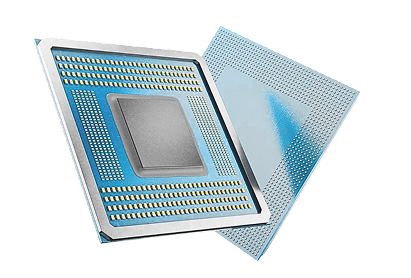
Custom AI model training
Image processing algorithms are built specifically for your materials and process variability. It avoids generic behavior and keeps automated visual inspection reliable as conditions change.
The benefits of automated inspection equipment
Data Science UA builds inspection systems with a focus on operational stability. You’ll replace manual checks with automated inspection equipment that operates identically each time.
Keep quality consistent
Such systems check every single product with the same logic, whether the line is running at a fast pace. You get fewer errors, less variation, and clear control over what leaves your production line.
Spot problems faster
Teams can quickly see if the same defect keeps appearing or if a process is going off track. Fixing problems happens faster, before they affect more products.
Cut quality control costs
Less manual checking means lower labor costs and less waste. The system maintains accuracy while helping your budget stretch further.
More intelligent inspections using AI
AI considers live production data and detects very minor problems that go unnoticed. It becomes capable of adjusting to small changes on the production line for more precise auto-powered inspection.
How AI and Data Science improve vision systems
AI and data science are taking vision systems to a new level of accuracy, speed, and adaptability.
Artificial Intelligence
Adaptive defect recognition
AI systems adapt to changes in substrates, surface quality, and illumination that aren’t predictable with static rules.
Real-time decision making
Neural networks analyze images instantly, enabling inline inspection without slowing production.
Reduced false calls
AI improves defect classification accuracy, lowering false positives while minimizing the escape rate (false negatives).
Data Science
Stable inspection logic
Data science provides a structured foundation for vision inspection technology, ensuring consistent, measurable, auto-driven visual inspection criteria.
Performance monitoring
Statistical monitoring is present to minimize escape rates and maximize production yield.
Model optimization
Production data improves models over time by retraining and validation as the process changes.
Opportunities of vision systems for quality inspection

Predictive maintenance
Vision systems for quality inspection can be used to troubleshoot early misalignments and imminent failures.

Production line optimization
Automatic visual inspection reveals consistent quality issues and process variances that impact throughput.

Compliance & traceability
Autonomous visual inspection records simplify audits, regulatory approvals, and quality certification.

Cost reduction in QA
Lower false calls and reduced scrap directly decrease quality assurance costs.
Turn your problem into insights!
Use auto-driven inspection data not to reject defects, but to understand why they happen
Our AI visual inspection process
We treat auto-powered visual inspection as part of the production system, not a standalone model.

Data collection
Assessment of cameras, optics, lighting, and computing resources for inline inspection or offline inspection.

Image preparation
Preparation of datasets that reflect real operating conditions.
Model build & testing
Training and validation focused on accuracy, stability, and low escape rate.

Integration & pilot
Integration with PLCs, MES, and testing under real workloads.

Scaling & optimization
Model updates as products, materials, or processes change.

Deployment & support
Ongoing monitoring, tuning, and technical support.

Data collection

Image preparation

Model build & testing

Integration & pilot

Scaling & optimization

Deployment & support

Our case studies
Our solutions don’t just identify objects. We build software that solves real-world problems and brings tangible value to companies across fields.

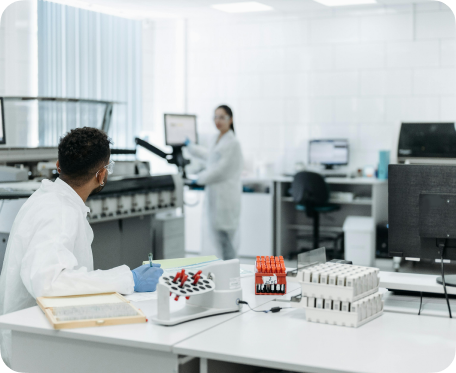
AI agent for sterility monitoring in pharmaceutical manufacturing
Enabled fast, accurate detection and escalation of non-compliant procedures, reducing human oversight burden by deploying a real-time sterility monitoring system.


Platform for 24/7 real-time safety monitoring
Improved factory software for better safety monitoring, integrated real-time location and sensor data, and built original tools and interfaces for efficient risk management.
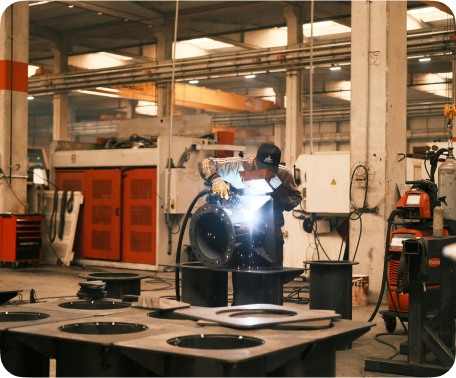
Aniline reactor predictive maintenance
Built a neural network for real-time sensor fusion to detect reactor issues, reducing failures by 40% and enhancing control capabilities.
Industries we work with

Pharmaceutical
Accelerating drug discovery with advanced analytics and ML.
- NLP algorithms
- Real-time Analytics
- Custom Dashboards
- Predictive Modeling
Pharmaceutical

Fintech
Improving safety and speed in financial services.
- Advanced Fraud Detection
- Personalized Banking
- Custom Dashboards
- Efficient Risk Management
Fintech
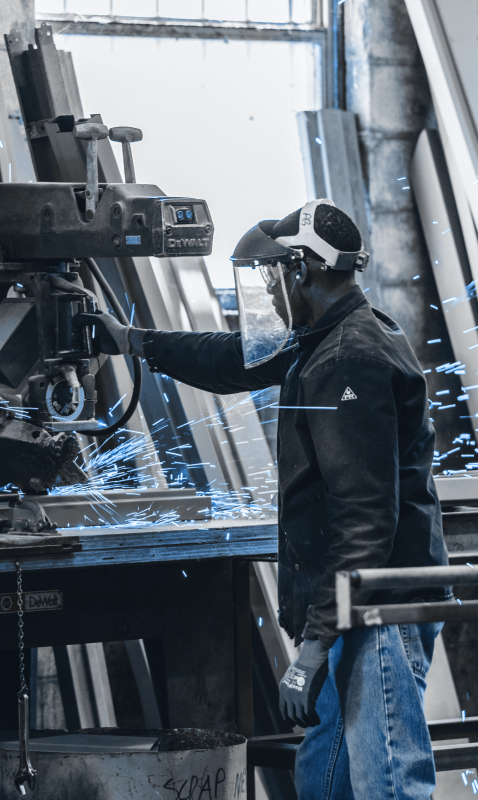
Manufacturing
Enhancing workforce well-being and operational success with customized AI solutions.
- Adaptive Manufacturing AI
- Real-time Analytics
- Custom Dashboards
- Resource Optimization
- Error-Free Automation
Manufacturing

Chemistry
AI transforms the chemistry industry with advanced data-driven solutions.
- Molecular Modeling and Simulation
- Predictive Chemical Synthesis and Reaction Monitoring
- Custom Data Visualization and Real-Time Optimization
Chemistry
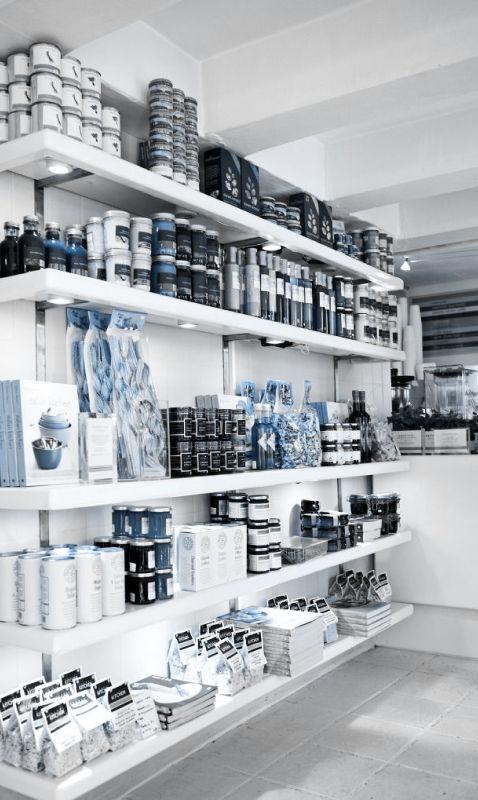
Retail & E-commerce
Transforming the shopping experience with innovative data solutions and AI.
- Personalized Recommendations
- Real-time Inventory Management
- Customer Behavior Analytics
- Predictive Sales Forecasting
Retail &
E-commerce

Green Energy
Revolutionizing renewable energy with cutting-edge technology and data insights.
- Smart Grid Optimization
- Real-time Energy Monitoring
- Predictive Maintenance
- Custom Energy Dashboards
Green Energy
Technology we work with
Our stack covers every stage of custom face recognition software development services, from data processing to deployment:

Computer Vision

Natural Language Processing

Recommendation systems

Tabular data analysis

Signal processing

Supervised learning

Unsupervised learning

Ensembles

Reinforcement learning

Evolutionary algorithms

Transformers

CNN

LSTM

YOLO

EfficientDet

PyTorch

TensorFlow

Keras

MXNet

JAX

Power BI

Tableau

Qlik

Plotly

Seaborn

Python

R

Scala

SQL

C++

J5

Java

Golang

TypeScript

Rust

Monolithic

Microservice

Serverless

Event-driven

Layered

AWS

GCP

Azure

IBM Cloud

Oracle Cloud

PostgreSQL

MongoDB

CouchDB

Cassandra

Hadoop
Why choose Data Science UA?
With 9+ years of delivering industrial automation solutions worldwide, we combine expertise with a clear understanding of production realities.
Applied CV expertise
- Comprehensive expertise: from optical inspection and AOI systems to robotic vision and inline inspection for any manufacturing process.
- Successful implementation: delivering over 200 AI projects in 20+ countries; built production-grade vision systems.
Custom development
- Process-aware design: optical inspection logic is tailored to materials, lighting conditions, and real defect patterns.
- Flexible engagement: full-cycle delivery or dedicated team support for ongoing inspection system evolution.
Integration & production readiness
- Easy deployment: Seamless integration via industrial protocols for PLCs and robotic controllers, ensuring minimal disruption to existing architecture.
- Fast line speed: Systems purpose-built to ensure uptime and throughput in round-the-clock high-volume manufacturing.
Industrial-grade technology
- Validated hardware and software: machine vision platforms, deep learning networks, high-speed imaging solutions, and industrial-grade optical lenses.
- Security and reliability: controlled access, secure data handling, and compliance with enterprise IT standards.
Business impact focus
- Measurable results: reduced false calls, lower escape rate, and decreased manual inspection costs.
- Fast time to value: pilot-ready systems delivered in weeks, with clear KPIs.
Support & optimization
- Continuous support and enhancement: regular model updates keep pace with the product.
- Team enablement: optional training to help teams operate, monitor, and extend vision systems.
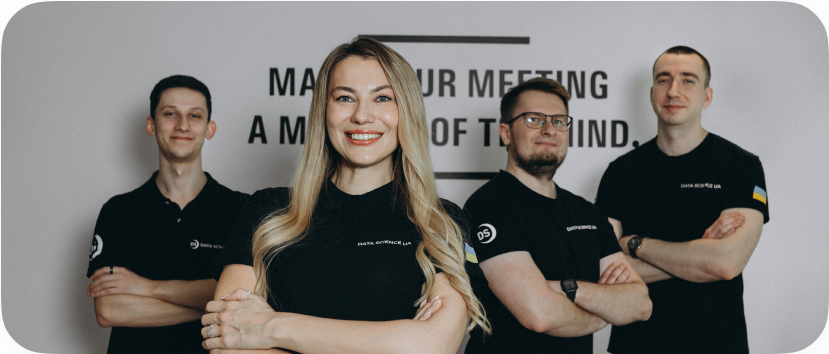
Reliable quality control starts with reliable vision. Implement systems that improve production stability today to forget about downtime tomorrow.
Why choose Data Science UA?
With 9+ years of delivering industrial automation solutions worldwide, we combine expertise with a clear understanding of production realities.

Applied CV expertise
- Comprehensive expertise: from optical inspection and AOI systems to robotic vision and inline inspection for any manufacturing process.
- Successful implementation: delivering over 200 AI projects in 20+ countries; built production-grade vision systems.

Custom development
- Process-aware design: optical inspection logic is tailored to materials, lighting conditions, and real defect patterns.
- Flexible engagement: full-cycle delivery or dedicated team support for ongoing inspection system evolution.

Integration & production readiness
- Easy deployment: Seamless integration via industrial protocols for PLCs and robotic controllers, ensuring minimal disruption to existing architecture.
- Fast line speed: Systems purpose-built to ensure uptime and throughput in round-the-clock high-volume manufacturing.

Industrial-grade technology
- Validated hardware and software: machine vision platforms, deep learning networks, high-speed imaging solutions, and industrial-grade optical lenses.
- Security and reliability: controlled access, secure data handling, and compliance with enterprise IT standards.

Business impact focus
- Measurable results: reduced false calls, lower escape rate, and decreased manual inspection costs.
- Fast time to value: pilot-ready systems delivered in weeks, with clear KPIs.

Support & optimization
- Continuous support and enhancement: regular model updates keep pace with the product.
- Team enablement: optional training to help teams operate, monitor, and extend vision systems.
Reliable quality control starts with reliable vision. Implement systems that improve production stability today to forget about downtime tomorrow.
FAQ
What are automation visual inspection systems?
It’s a useful alternative to manually inspecting products using computer vision algorithms and machine vision software that can automatically screen for defects, variations, etc.
What is the difference between AI visual inspection and traditional machine vision?
Traditional machine vision is basically “follow the rules exactly”. Automated visual inspection systems are learning-based: they use neural networks to recognise complex, unpredictable defects that traditional rules simply can’t define.
Can your automated inspection software integrate with existing ERP/MES?
Yes, it’s built to plug into existing systems using standard connections.
How accurate are these vision systems?
We see 95-99% correct detection. Final performance depends on defect complexity, lighting stability, and the quality of the data.
How much time does it take to deploy an AI vision solution?
Every solution needs thorough evaluation and planning, so the project timeline heavily depends on the nature of the solution and the environment for its deployment. Yet, typically, it takes 1-3 months. For a more precise assessment, you may always reach out to our experts!
