

AI cold calling: What it is and how it works
If you’ve ever worked with cold calling, you know how exhausting it can be. You call, talk, explain, and all you get in response is silence or “not interested”. So it’s no surprise that businesses are looking for ways to automate this chaos. One such way is through the use of AI.
Essentially, AI cold calling is a mixture of voice technology, NLP, and analytics. The system initiates a call, listens, understands what the customer is saying, responds, and learns. It doesn’t get tired, confused, or forget to click “save to CRM”.
AI cold calling doesn’t replace people; it takes away the routine so that the sales team only works with those who are really ready to listen. There are fewer accidents, more predictability, and, most importantly, it is clear why the customer said “yes” or “no.”
To implement AI or not? That’s the question… If your managers spend half a day on “calls to nowhere”, the answer is obvious. However, it is essential not only to purchase the technology but also to integrate it wisely, with clear scenarios and analytics.
More on this in our article today.
Key features of AI in cold calling
Smarter lead generation & organization
The first thing any call starts with is understanding who to call. This is where AI saves months of work. The system analyzes lead sources, their behavior on the website, and their history of interactions with your brand.
Let’s say one person opened three emails, looked at the pricing page, and downloaded a case study. Another visited the home page and left. Who should be called first? AI cold calling understands this and immediately shows the manager the hot leads.
The system automatically segments the database: who is ready to make a deal right now, who is in the research phase, and who is not suitable for your product at all. Managers stop wasting time on cold contacts and focus on those who may buy tomorrow.
The entire workload is visible in real time. With the help of AI, you can see how many calls each manager has made, where leads are stuck, and which segments convert better.
Real-time conversation analysis & coaching
Imagine: a manager mentions the price, and the customer pauses for three seconds. While it may be a normal pause for a real worker, for AI, it is a sign of doubt about the purchase. Using natural language processing services, the system instantly highlights this to the manager and suggests a clarifying question or argument that will overcome the objection.
Or another example: the customer mentions the word “budget” three times. AI detects the pattern and suggests emphasizing savings or offering flexible payment terms. Moreover, all this happens in the moment, while the conversation is still ongoing.
After the call, the manager receives detailed analytics: what worked, where the customer’s attention was lost, which arguments caught their attention, and which left them indifferent.

Automated multi-channel follow-ups
All salespeople know that one of the main failures in AI cold calling is lost leads after the first contact. The customer did not answer the phone or reply, “Call back later”, and the manager forgot about them.
AI solves this problem systematically: if the customer didn’t answer the call, the system automatically sends a personalized letter within an hour. Such a letter usually contains the context of the call, the benefits of the product, and a call to action. If there is no response after a day, an SMS with a short offer is sent. Two days later, a message is sent on LinkedIn with an invitation to a meeting.
All of this is configured according to rules: hot leads receive an instant follow-up, warm leads receive one after a day, and cold leads receive one after a week. At the same time, the system takes into account previous contacts so as not to spam the same person.
AI-driven sales training & role-playing
AI can train your team using real-life scenarios: role-playing games, objections, and difficult customers.
Simulation of difficult calls and objections.
Automatic analysis: response speed, logic, script adherence.
Interactive recommendations for managers after each call.
KPIs for monitoring:
Deal closure rate: +15–20%
New employee adaptation time: −50%
Script errors/customer loss: −50%

How AI agents for calls work: the technology behind the scenes
An AI cold calling agent is a combination of several technologies that work in sync to make calls sound natural and deliver results. Let’s take a look at what they consist of.
Centralized knowledge base
An AI agent must know everything about your product, customers, and interaction history. The knowledge base is a single place where scripts, FAQs, case studies, data on previous contacts, and purchases are stored.
When a manager prepares for a call, they can see the customer’s full profile in seconds: what they bought, what questions they asked, what stage of the funnel they are at, and what interests they showed. It allows them to get straight into the context, rather than spending the first five minutes figuring out the basics.
TTS
When automated cold calling makes calls on its own, the voice must sound natural. Older systems sounded like robots from the 90s, and people immediately hung up. Modern TTS technologies create a voice that is difficult to distinguish from a human one.
An AI cold calling agent imitates pauses for breathing, slight stutters, and changes in tone depending on the context.
If it needs to express confidence, the voice becomes clearer. If it needs to show empathy, it becomes softer. All this makes the conversation comfortable and doesn’t cause rejection.
The key here is balance. The voice should not be too perfect, otherwise it feels fake. Small imperfections make speech sound more natural.
You can learn more about the development of AI agents on the page: AI agent development company.
The benefits of AI in cold calling: what businesses gain
The team works more efficiently and experiences less burnout.
When managers stop calling hundreds of cold contacts and focus on ready-made leads, everything changes. First, conversion rates go up – that’s obvious. Second, the team stops burning out from daily rejections. Intelligent dialer and speech solutions increase successful connection rates, improve pitch structure, and reduce operational workload for sales teams by 15-20%.
Imagine: previously, out of 100 calls, 90 ended with standard rejection phrases. Now, out of 50 calls, 20 turn into a dialogue, and 5 turn into a deal. Managers see the results of their work and feel that their efforts are not in vain. Motivation increases significantly, and staff turnover decreases dramatically.
Personalization at a level that was previously unattainable
Every customer wants to feel that they are being addressed individually, not as a number in a database. AI makes this possible even when working with thousands of contacts.
The system analyzes data about each customer: what pages they viewed, what they bought before, what emails they opened, and what topics they responded to. Based on this, a personalized approach is formed. One customer values speed; they are told about rapid implementation. Another is concerned about the budget; they are shown savings. A third is looking for reliability; they are given case studies and reviews.
This is a real adaptation of the entire conversation to the interests and pain points of a specific person. And it works: engagement grows, customers listen longer, and conversion increases.
You can learn more about how customer segmentation with AI works here: customer segmentation services.

Practical guide: how to use AI in cold calls
Step 1: Choosing the right platform
Now you know how to use AI for cold calling. However, have you known that not all AI platforms are the same? The first thing to look at is integration with your CRM. If the system is not synchronized with the database, you get a lot of fragmented information that you have to collect manually. It kills the whole point of automation.
The second point is analysis. The platform should not just record calls, but give detailed reports: for each manager, for each script, for each segment of the slides. You should see what works and what doesn’t.
The third criterion is flexibility of settings. Each business has its own processes, its own scripts, its own vortex. A good platform allows you to customize everything, rather than having to adapt to ready-made templates.
Last – support. Make sure you have access to technical support and advice.
Step 2: Prepare for calls with AI
The manager used to open a card and see only the name and phone number. Now AI shows the full picture in seconds: purchase history, pages visited, open letters, interests, and level of readiness to deal.
Based on this data, the system offers a personalized script. For example, if a client has visited the integrations page three times, AI tells you to start by talking about compatibility with other systems. If the customer looked at cases from his industry, it is necessary to mention relevant examples.
Call preparation is reduced from 10-15 minutes to 2-3. The manager immediately understands who he is talking to and what approach to use.
Step 3: Analysis of results and continuous improvement
After each call, AI cold calling generates a report: what worked, where there was a hitch, which arguments got the client, and where the interest was lost. The manager sees specific growth points, not general phrases like “be more confident”.
For example, you see that small business clients convert worse than average. So you should either change the approach to this segment or focus on more promising faces.
Or it turns out that mentioning a specific product function increases the chance of meeting by 25%. You add it to a script for the whole team, and conversion grows for everyone, not just one manager.

What to look out for when selecting an AI software for calls
Automatic dialing and telephone system
A good AI cold calling platform should automate the dialing process itself. The manager does not waste time searching for numbers, manually dialing. The system itself calls the base, filters out unavailable numbers, passes answering machines, and connects the manager only with living people.
It seems trivial, but in practice saves up to 40% of the working time. The manager doesn’t make 50 calls a day, but 80, without increasing the load.
The AI cold calling software should manage the call queue: prioritize hot leads, return missed contacts, and distribute workload among managers. All this automatically, without manual control.
Recording and working with calls
The manager can listen to your conversation and see where you lost a client. The leader can identify successful patterns and scale them to the whole team.
Plus, records become the basis for training beginners. They listen to the best examples, see how objections are worked out, and how deals are closed. AI cold calling software works better than any theoretical training.
Detailed analysis and reporting
Analytics should not just be beautiful graphics, but a tool for decision-making. You should see:
– Conversion for each script and page segment.
– Average talk time and number of successful contacts per manager.
– Point of failure: at what stage do customers say “no” most often?
– Dynamics: how the indicators change over time.
A good AI cold calling software allows you to build custom reports, filter data by different parameters, and export results. You should get answers to your questions, not deal with defaulting dashboards.
Multi-channel tools for outreach
The best AI for cold calling is not limited to calls only. They allow you to combine calls with email, SMS, LinkedIn, and messengers. Because customers react differently to different channels.
One person does not answer the phone, but responds to a letter. Another ignores email, but responds to SMS. The third person agrees to meet only after posting on LinkedIn. Multicanality increases the chance of contact.
All communication should be synchronized. The system records all contacts so that the manager can see the complete history and doesn’t duplicate messages. This creates a solid experience for the client, not a feeling of spam.
Integration with CRM is required
Without CRM integration, all automation is meaningless. Managers have to manually transfer data between systems, which takes time and leads to errors. Information is lost, duplicated, and outdated.
Good integration is when all data is synchronized automatically and in real time. The call is recorded in CRM, the record is linked to the client’s card, and follow-up tasks are created automatically. The manager sees the whole picture in one place and does not waste time on routine.
Plus, AI for cold calling gives a single database for analysis. You see the entire customer journey: from the first touch to closing the transaction. You can analyze which sources of leads give the best conversion, and how many taps are needed for a transaction where potential customers are lost.
TOP-10 AI tools for cold calling in your company
ZoomInfo ––> Rich database of companies and profiles ––> Segment the database by industry and company size, so that calls go only to hot lines, saving team time.
Nextiva ––> Automation of calls and messages ––> You create a call queue, the system itself rewrites missed contacts, and managers focus on the conversation, not on the dialing.
VanillaSoft ––> Managing pipelines and follow-up ––> After the call, the manager sees hints when and which channel is better to contact the client, increasing the chance of meeting or deal.
VICIdial ––> Open customizable platform ––> Customize call scenarios for your products and sales departments, scaling the process to dozens of operators without loss of quality.
InsideSales (XANT) ––> AI analysis of calls and prediction ––> The system tells you which leads are more likely to respond, and gives you the best time to call.
PhoneBurner ––> Quick dial + CRM ––> Managers make more calls per day, and the system automatically sends follow-up letters with personalized text.
Close ––> All communication in one window ––> All calls, SMS, and emails are linked to the CRM, easily track each manager’s performance, and improve scripts.
Klenty ––> Multi-channel outbound ––> At the same time, you run the email chain and the calls, the system tracks the responses and sorts the leads according to the readiness of the transaction.
Clari ––> Sales prediction ––> You can see the bottlenecks in the pipeline and understand exactly which segments of the lids are slowing down the conversion growth to change strategy.
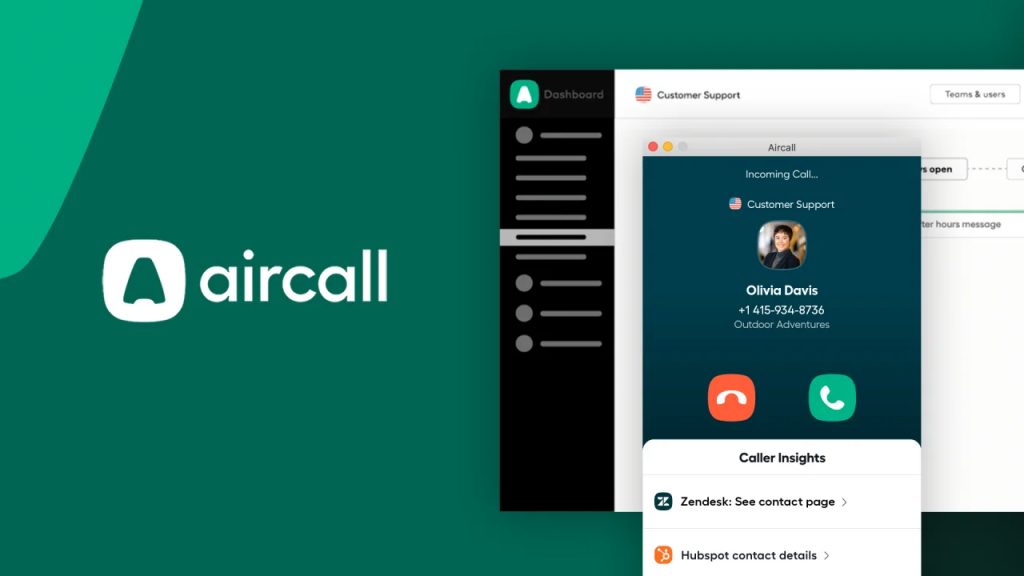
Aircall ––> Easy integration + analytics ––> Call recording and performance reports help to quickly identify successful scripts and learning points for the team.

How do companies achieve the data-driven decision-making process?
At Data Science UA we assist companies in extracting real value from unstructured data sources
How to automate AI cold calls effectively
Conversational AI cold calling starts with understanding your customers. Segment the audience based on readiness to contact and interest in the product. Scripts should be alive and adaptive so that the manager can react flexibly to responses. An AI cold calling helps to initiate calls, recognize voice, record reactions, and save data in CRM. Personalization is key: mentioning the name, past interactions, and interests increases trust and conversion. All this needs to be monitored and analyzed: how many successful contacts, the duration of calls, and the percentage of closed deals.

AI trends 2025 – Top innovations
read MORE

The future of AI in cold calling
Soon, an AI cold caller won’t only call, but also predict the readiness to buy, suggest personal proposals, and optimize scripts in real time. Each interaction will be a source of information for the whole team, and conversion and ROI will grow through the analysis of big data.
Therefore, if you still doubt whether to implement AI or not, our advice is: Before you jump into AI, take a pause.
It is not worth implementing AI cold calling just because “everyone does”. Understand what you want to improve: the quality of the conversations, the speed of processing the sheets, or the transparency of the analysis.
AI works effectively only when there is structured data, a clear sales process, and a team ready for change.
Only in this way will you get not “another system”, but a real growth lever for the sales department. Therefore, if you have decided to implement such a system, you need a reliable partner who is ready for the process.
Data Science UA helps build a complete AI cold calling ecosystem. Among our advantages: we adapt AI to your business, record all conversations with tonality analysis and keywords, integrate with CRM, train the team, and free managers from routine. As a result, calls pass faster, more accurately, and with fewer losses. The implementation ROI pays off in just a few months, and the team starts working as a coherent mechanism.
FAQ
How does AI personalize cold calling at scale?
AI analyzes CRM data, past interactions, and behavioral signals to tailor scripts, timing, and offers for each prospect, while doing this simultaneously across thousands of calls.
How does AI handle objections during calls?
AI listens for objection patterns in real time, suggests proven responses to agents, and learns from successful conversations to continuously improve objection-handling playbooks.
How can businesses ensure ethical AI in cold calling?
By using transparent consent practices, limiting data use to lawful sources, keeping humans in the loop for decisions, and regularly auditing models for bias and compliance.